

Green Energy Message
Green Mile grasp carbon footprint !
Providing Unit: Environmental Protection Administration, Executive Yuan
Taiwan Product Carbon Footprint
What is Carbon Footprint►
The carbon footprint may be defined as an activity or the carbon emission generated directly and indirectly over the whole life cycle of product. In comparison with the greenhouse gas emission as known by all of us in general, the difference of carbon footprint is to start from the consumer end and get rid of so-called 『Where has chimney, where is pollution』concept. The greenhouse gas emission by commercial and industrial institutions generally refers to the emissions from only the production of a product. However, the carbon footprint emission will have to include exploitation and production of raw material, production and assembly of product itself, until the emission generated during the product consumption and use, and the emission generated during the dumping and recycling. Therefore, the above stated range is the whole life cycle of a product.
Currently, it has been recognized as the action plan for achieving the target of alleviating the global warming. As pointed out by the recent study report, the commercial institutes pay attention to the issue of climate change, and pay attention to develop the product able to alleviate the climate change (Economist Intelligence Unit Report, 2009). Consequently, the carbon footprint of product has already widely become the tool used by Governments and commercial institutes to achieve the target, and the new media for communication as well.
As viewing from the coverage range of greenhouse gases, the examination of greenhouse gases can be divided into three (3) categories:
- The energy combustion emission statistics of countries or regions
- Pinpoint to commercial institutes or organization itself and the related greenhouse gas emission
- Pinpoint to greenhouse gas emission during the life cycle of individual product, in which, the third category is to examine the greenhouse gas emission during the life cycle of individual product i.e. so-called「Carbon Footprint」.
In comparison with the greenhouse gas emission as known by all of us in general, the difference of carbon footprint is to start from the consumer end and get rid of so-called 『Where has chimney, where is pollution』concept. The greenhouse gas emission by commercial and industrial institutions generally refers to the emissions from only the production of a product. However, the carbon footprint emission will have to include exploitation and production of raw material, production and assembly of product itself, until the emission generated during the product consumption and use, and the emission generated during the dumping and recycling. Therefore, the above stated range is the whole life cycle of a product.
As pointed out by the British survey, although the greenhouse gas emission was lowered 5% between the year of 1992 ~ 2004, but actually the emission was risen 18% if the indirect greenhouse gas emission resulted from the consumption was included (Wiedmann et al, 2008). In addition, as pointed out by another study, the total greenhouse gas emission of China has already exceeded United States and becomes the number one in the world. However, there are 23% of its total emission resulted indirectly from the manufacturing products to satisfy the living necessities required by the developed countries.
Facing with the issue of global warming, if it only focuses on the reduction of carbon emission of own country, it will be insufficient in response to the present severe situation.
Consequently, the concept of carbon footprint is adopted, and incorporate the related greenhouse gas emission of individual or commercial institute activities into consideration, will then be able to develop an appropriate low-carbon life and emission reduction plan. Otherwise, it may only result the illusion of transferring the pollution sources but not actually reducing the emission.
emission reduction plan. Otherwise, it may only result the illusion of transferring the pollution sources but not actually reducing the emission.
What is Carbon Label►
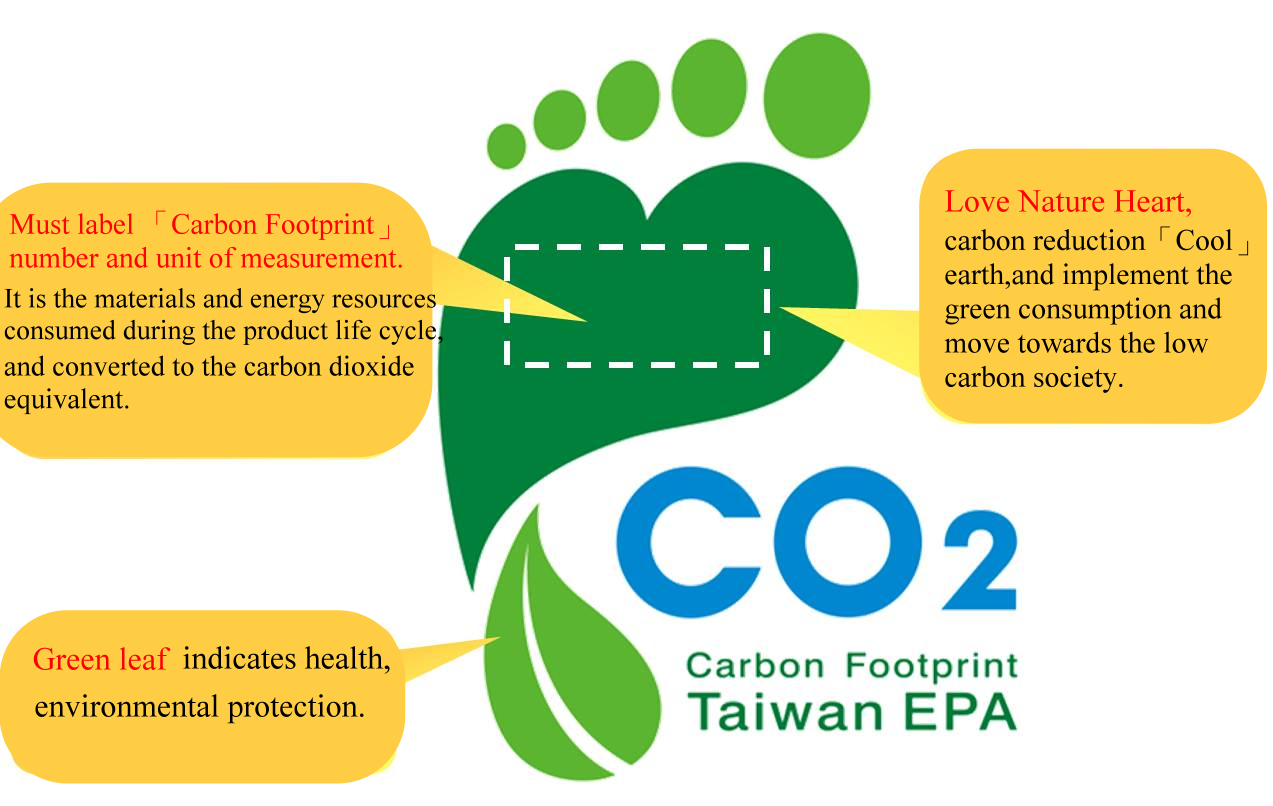
The carbon footprint label also known as carbon label or carbon emission label, is an indication system that shows the carbon emission of businesses, production processes, products (including services) as well as individuals. Its meaning is referred to the greenhouse gases generated during all the life cycle stages of a product from the raw material extraction, factory manufacturing, distribution and sale, use by consumer, and finally disposal and recycling, and then converted to the sum of carbon dioxide equivalent. The carbon reduction label lunched by Carbon Trust, established by British government in the year of 2001, was the earliest carbon label in the world.
Through the implementation of carbon label system, it will be able to transparent the carbon emission sources throughout different product stages, push the commercial institutes adjusting their manufacturing process with larger carbon emission, and also push the consumer using the product correctly, in order to achieve the maximum benefits of reducing the product carbon emission.
Currently includes United Kingdom, United States, Canada, Japan, Korea, Thailand, Australia have already expanded the construction of relevant policy and works for the carbon footprint like a raging fire. As learned from the experience of implementing the product carbon footprint, many countries are moving towards the road of low-carbon society, and also bring the opportunity for commercial institutes reducing carbon emission and strengthen the company’s brand reputation. Our country has begun drafting the mechanism of Taiwan carbon footprint in the year of 2009, aiming to strengthen the market competitiveness of low-carbon products through our carbon label policy, and enhance the consumer awareness and willingness to buy carbon footprint labeled products, in order to achieve the sustainable consumption and production mode of low-carbon economics.
Illustration Description of Carbon Label►